Inspection, integrity and engineering capability across the complete asset lifecycle
IAIS UAE organises its technical capability into 12 approved parent service categories covering 187 individual service pages. Each service below opens a dedicated page using the approved Final Version 1.0 content master.
Select a category to move directly to its approved sub-service scope.
Full Capability
Approved service scope
Search all 187 approved service pages. Every service name opens its own dedicated page with the approved service content and parent-category context.
12 categories · 187 sub-services
SERVICE CATEGORY 01 / 12
Service Category 01
Asset Integrity Management & Engineering
This category brings inspection, engineering, operating and maintenance information into one coordinated integrity-management process. Its purpose is not simply to generate more inspection data, but to determine which assets and degradation mechanisms matter most, what information is required, when intervention is justified and how continued operation can be supported responsibly. The work may be applied to a single critical item, an operating unit or a wider portfolio covering static equipment, piping, tanks, structures and reliability-critical machinery.
This category provides conventional and advanced nondestructive examination for detecting, locating, sizing and monitoring discontinuities without unnecessarily damaging the component. IAIS UAE selects methods according to material, geometry, thickness, accessibility, surface condition, expected defect orientation and the technical decision required. Conventional techniques establish broad quality and condition information, while advanced ultrasonic, electromagnetic, radiographic and monitoring methods can provide improved coverage, imaging or screening for complex assets.
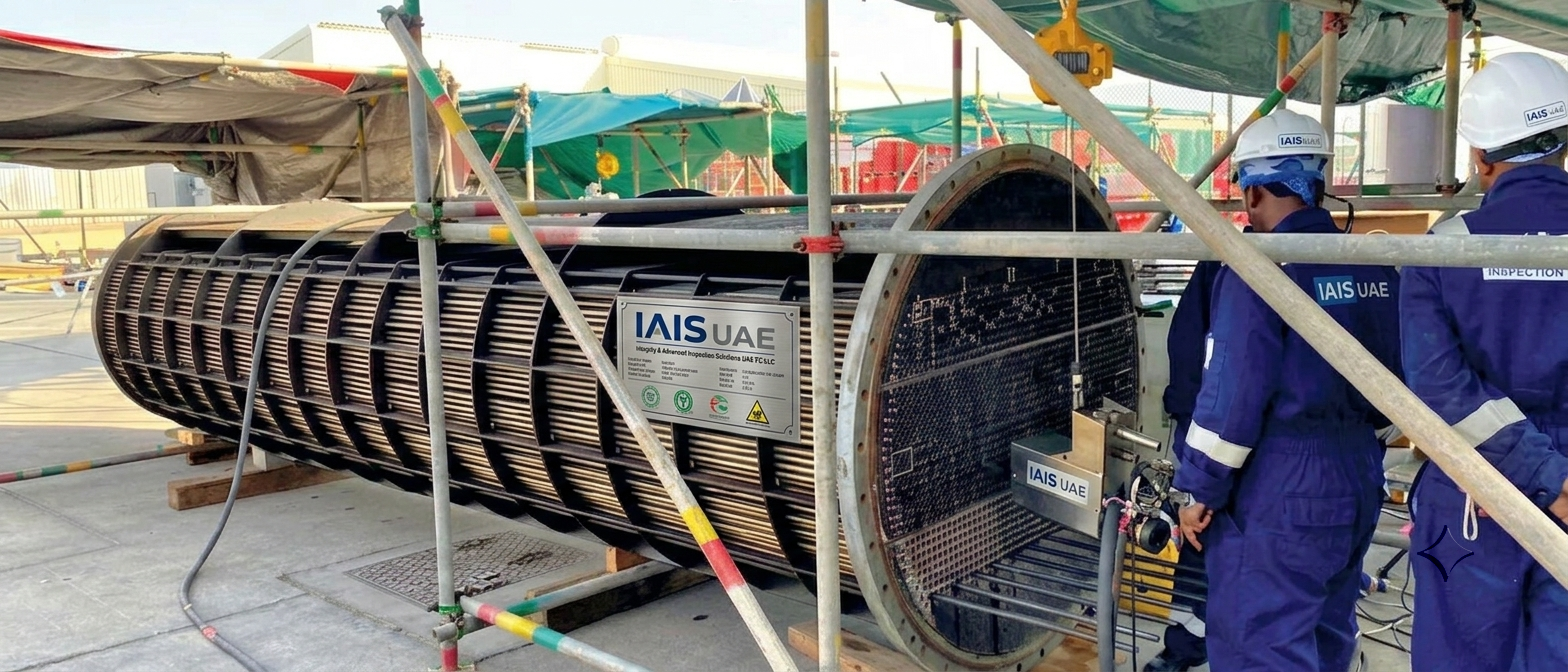
This category focuses on the condition of tubes, tube ends, tube sheets and associated pressure parts within heat exchangers, condensers, boilers, air coolers and similar heat-transfer equipment. Tube failures can create leakage, contamination, efficiency loss, unplanned shutdown or safety exposure; therefore, the programme must match the tube material, geometry and expected deterioration. Electromagnetic, ultrasonic and visual methods may be combined to distinguish local wall loss, pitting, cracking, erosion, fretting and other service-related damage.
This category provides lifecycle integrity support for aboveground and other industrial storage tanks from fabrication and commissioning through in-service inspection, shutdown examination, repair and return to service. Tank integrity depends on the combined condition of the floor, shell, roof, nozzles, appurtenances, foundations, settlement behaviour, coatings, linings and secondary containment. IAIS UAE develops the scope around stored product, tank design, corrosion history, operating constraints and the governing inspection framework.
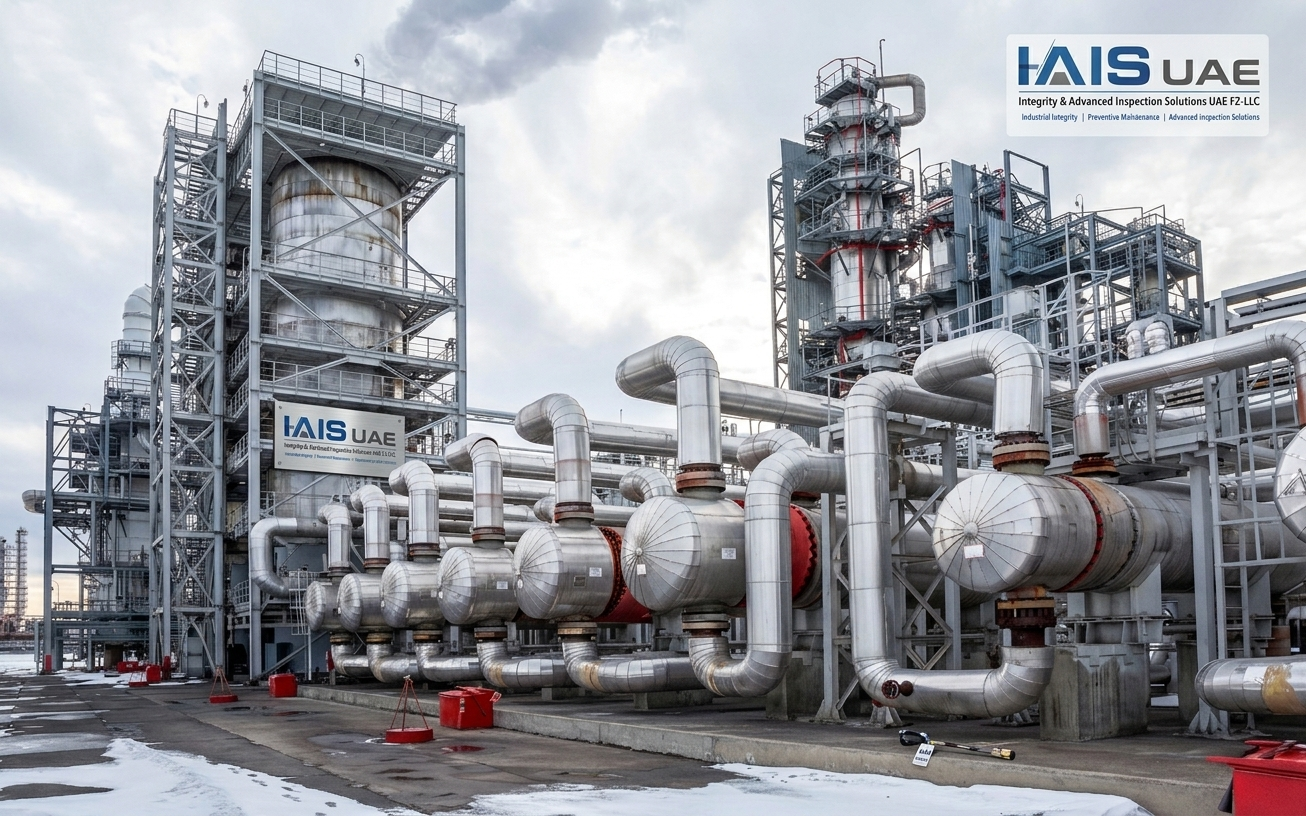
This category addresses the integrity of pressure vessels, boilers, columns, reactors, exchangers, drums, separators, heaters, air coolers and associated pressure-retaining systems. These assets may be exposed to internal corrosion, erosion, cracking, creep, fatigue, embrittlement, thermal damage, CUI and process-specific deterioration. Effective inspection must connect the equipment design and materials to the actual service environment and provide sufficient evidence for maintenance, repair or continued-operation decisions.
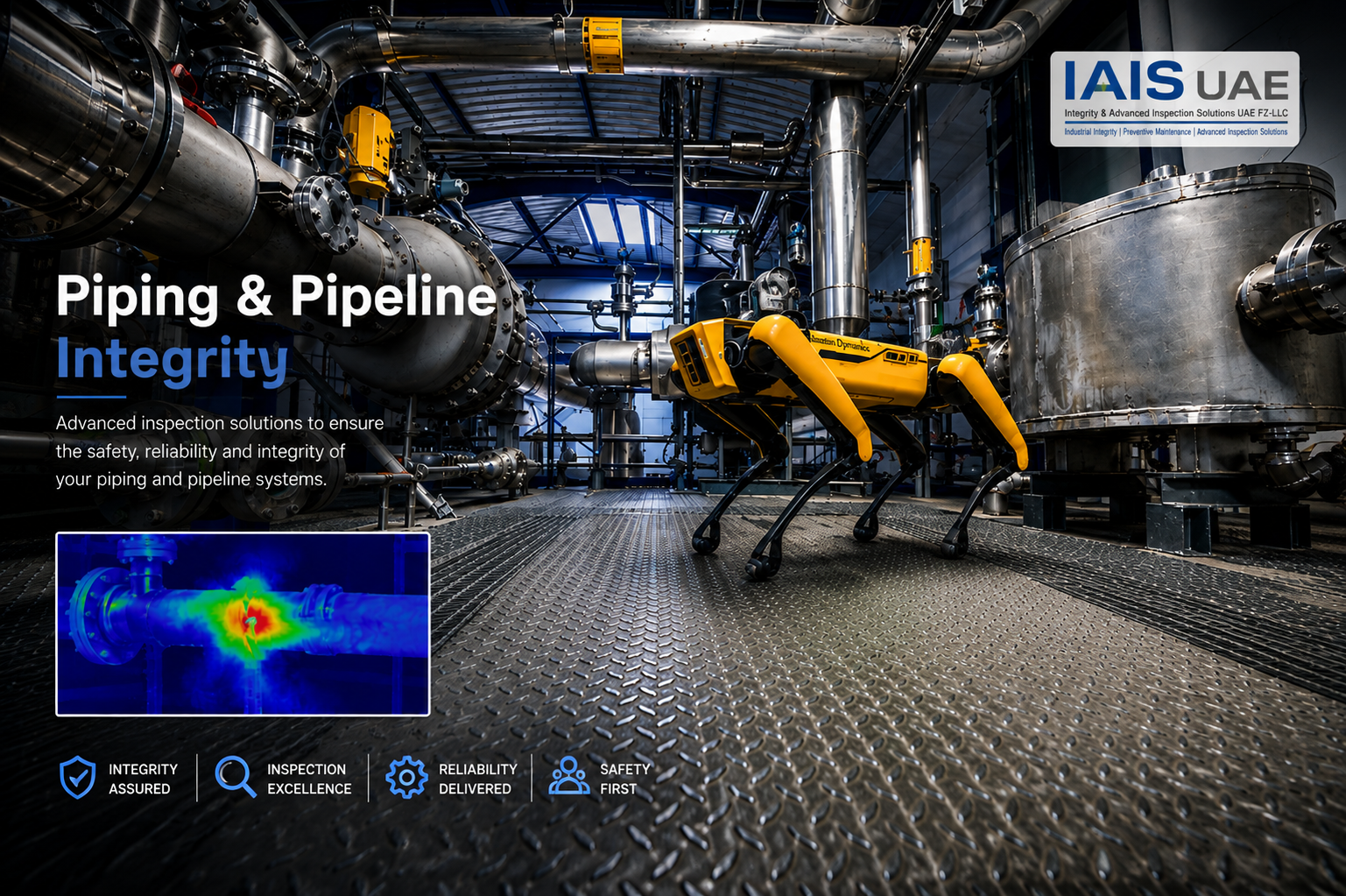
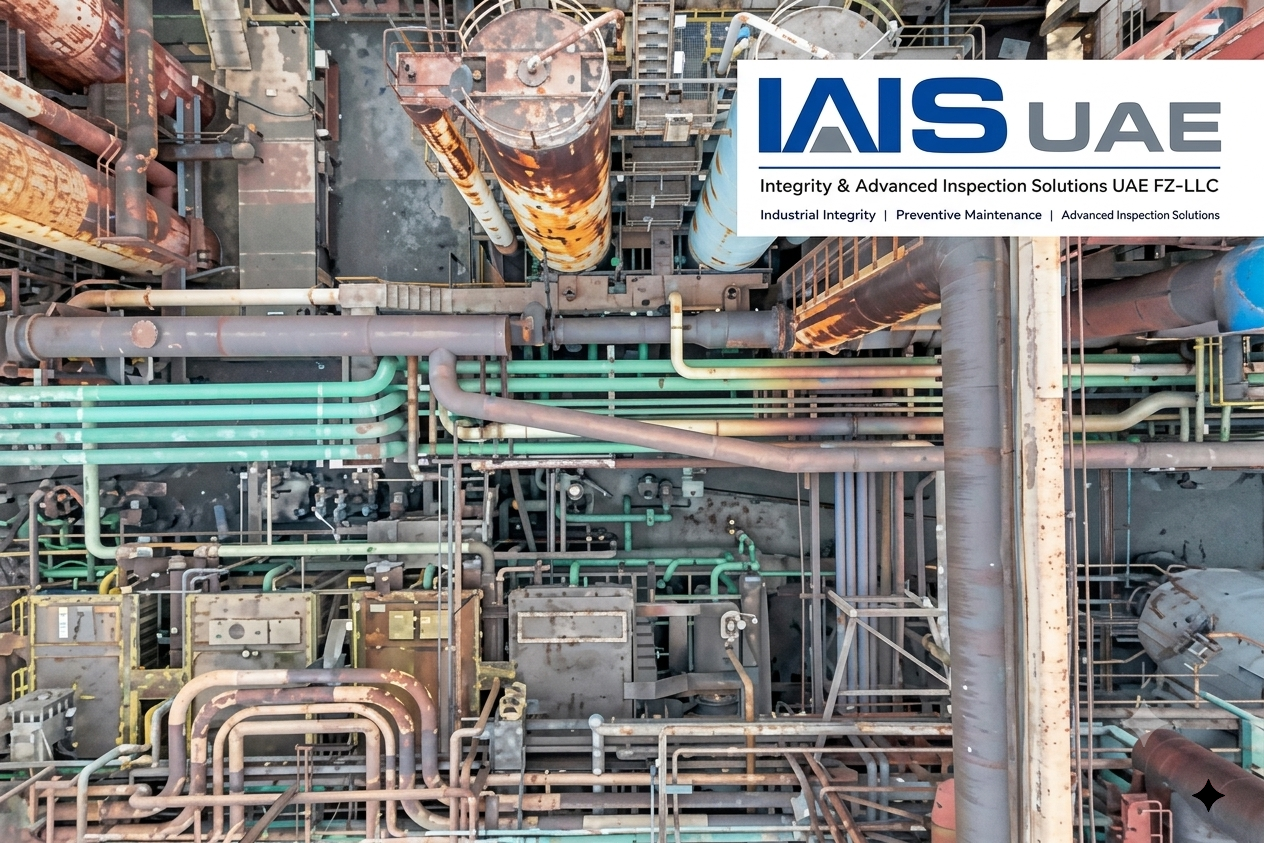
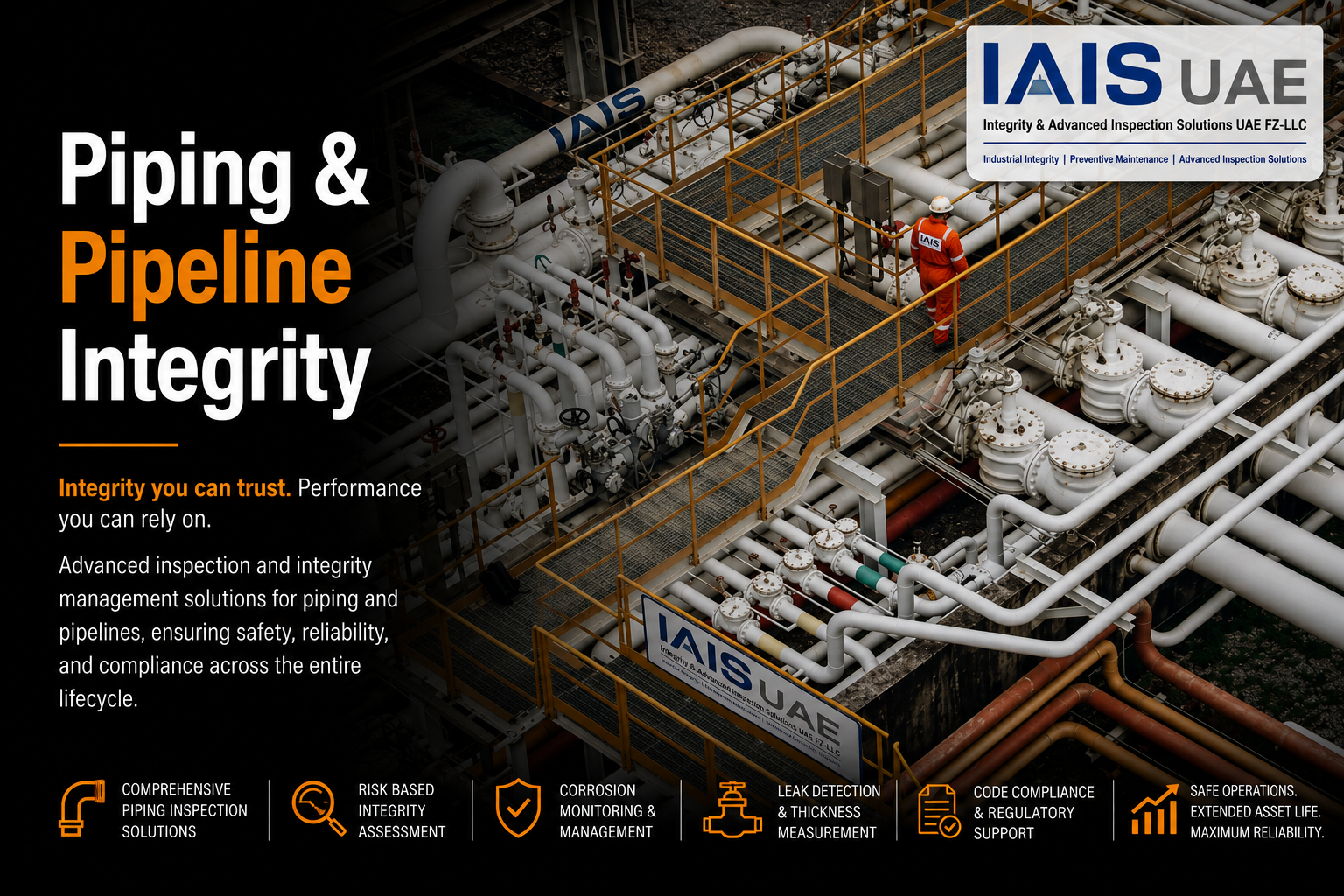
This category provides integrity support for process piping, utility systems, plant pipelines and transmission lines throughout construction, operation, maintenance and repair. Piping systems contain many branches, fittings, dead legs, injection points, supports, insulated sections and welded joints where service conditions can concentrate degradation. IAIS UAE organises the scope by corrosion circuit, damage mechanism and line criticality so that inspection locations are technically justified and repeatable.
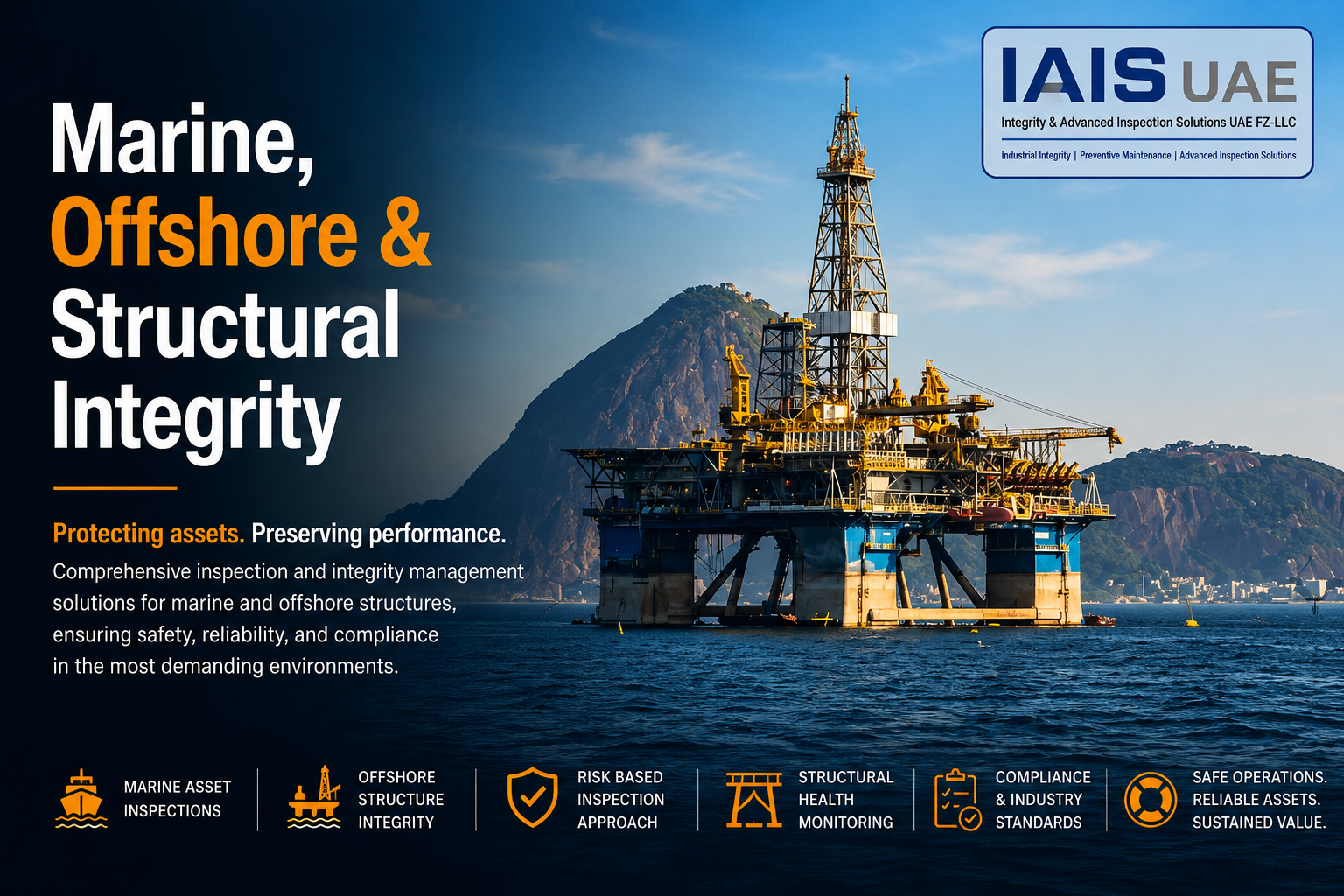
This category supports ships, offshore units, platforms, ports and industrial structures exposed to seawater, dynamic loading, fatigue, impact, coating breakdown and difficult access. Marine and offshore assets require condition evidence that is location-controlled, compatible with owner and classification requirements and suitable for repair or docking decisions. Structural inspection also demands attention to load paths, connections, nodes, weld details, corrosion traps and previous modifications.
This category uses rope access, confined-space systems, drones, robotic platforms, remote visual tools, thermal imaging and digital survey technologies to obtain inspection information from difficult, hazardous, elevated, enclosed or extensive areas. The purpose is to improve safe access and data coverage while reducing scaffolding, shutdown time or personnel exposure where practicable. The technology is selected according to the inspection objective; access innovation does not replace the need for a technically capable sensor and a controlled examination process.
This category provides controlled heating, soaking and cooling of welds, components and refractory systems to meet specified metallurgical, fabrication or process requirements. Successful heat treatment depends on more than reaching a target temperature: heating rates, temperature gradients, soak duration, thermocouple placement, insulation, power distribution and cooling must be controlled and documented. IAIS UAE develops the arrangement from the material, thickness, geometry, welding procedure and applicable thermal cycle.
This category investigates what a material is, how it has changed in service, why it has deteriorated or failed and what action can prevent recurrence. Field verification, metallography, chemical analysis, mechanical testing, corrosion evaluation, coating inspection and cathodic-protection assessment provide complementary evidence. The programme is built around a defined technical question and preserves traceability from sampling or field location through testing, interpretation and recommendation.
This category provides independent surveillance and verification throughout procurement, fabrication, installation, testing, commissioning and handover. The objective is to confirm that materials, workmanship, processes, tests and documentation comply with approved purchase, code and project requirements before equipment or work progresses beyond critical stages. IAIS UAE can support individual source visits or provide continuous quality surveillance across vendors, sites and project packages.
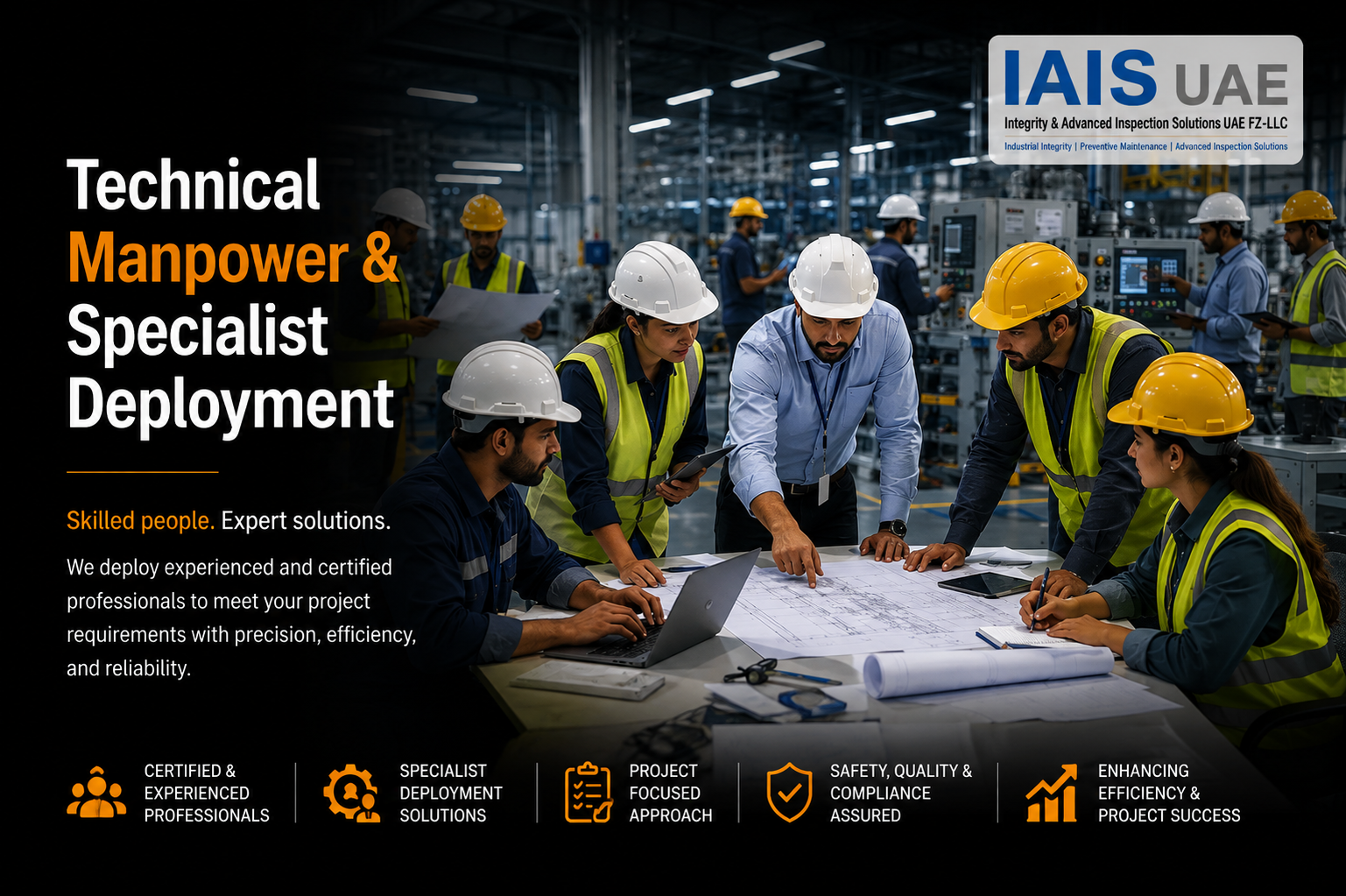
This category supplies inspection, integrity, materials, welding, quality and PWHT specialists for defined technical assignments. Deployment may support a short inspection campaign, shutdown, emergency response, vendor assignment, construction project or long-term site requirement. The emphasis is on matching verified competence and relevant experience to the actual duty, not simply providing headcount. Roles, reporting lines, deliverables and technical authority are established before mobilisation.
 SERVICE CATEGORY 01 / 12
 SERVICE CATEGORY 07 / 12